Introduction
The global CRM market has crossed $90 billion in 2024 and is projected to reach new heights in 2026 as enterprises shift toward AI-driven customer management. For large businesses operating across multiple departments, regions, and customer segments, choosing the right CRM is not optional — it is a mission-critical decision that impacts revenue, customer retention, team productivity, and long-term scalability.
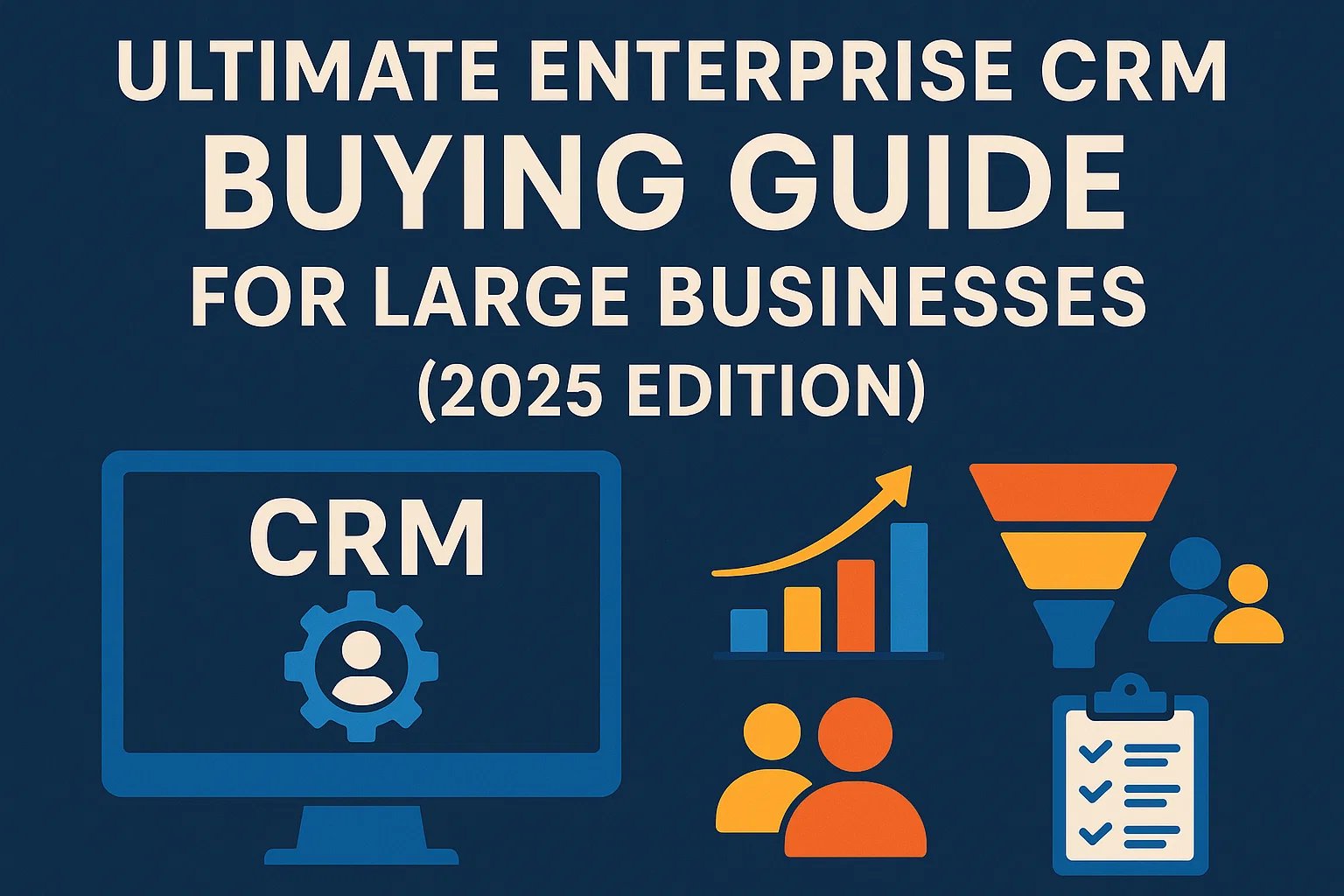
This 2026 Enterprise CRM Buying Guide is designed for decision-makers such as CTOs, CIOs, CMOs, product directors, enterprise architects, and operations managers who need a comprehensive overview of CRM capabilities before purchasing. This guide provides a detailed breakdown of CRM features, enterprise functionalities, pricing structures, AI automation technologies, and a comparison of the top platforms to help organizations make the smartest investment.
What Makes a CRM “Enterprise-Grade”?
- Advanced scalability capable of handling massive data and interactions.
- Role-based access control for department-level permissions.
- Highly customizable workflows for complex enterprise processes.
- Deep analytics, forecasting, and performance insights.
- Omnichannel communication across all customer touchpoints.
- AI-driven predictions, scoring, and segmentation.
- Enterprise-level encryption, compliance, and zero-trust security.
- Full API ecosystem for ERP, finance, and marketing integrations.
Why Enterprises Need Modern CRM Solutions
- Managing global customer databases
- Real-time synchronization across departments
- Consistent omnichannel customer experience
- Automation for thousands of workflows
- Reducing churn in competitive markets
- Using AI for data-driven decision-making
Key Features Every Enterprise CRM Must Include in 2026
AI-Powered Lead Scoring
AI identifies high-value leads using behavior, engagement, and demographic analysis to improve conversions and sales efficiency.
Automated Sales Workflows
Automation ensures follow-ups, escalations, and task management without manual effort.
Enterprise-Level Data Security
- AES-256 encryption
- SSO, MFA, and zero-trust authentication
- GDPR, HIPAA, SOC 2, ISO compliance
- AI-powered threat detection
Omnichannel Communication
- Email, SMS, social media, live chat
- WhatsApp Business & voice calls
- AI chatbots for 24/7 engagement
Predictive Analytics & Forecasting
Enterprises can forecast revenue, detect churn risk, and identify sales patterns early.
Deep ERP Integrations
Integration with SAP, Oracle, Microsoft Dynamics, BI tools, and accounting systems ensures unified data flow.
Enterprise CRM Use Cases Across Industries
- Banking & Finance
- Healthcare
- Insurance
- Telecom
- Retail & Ecommerce
- Real Estate
- Logistics
- Education
Top Enterprise CRM Platforms in 2026
- Salesforce Enterprise Cloud
- HubSpot Enterprise CRM
- Microsoft Dynamics 365
- Zoho CRM Plus
- Oracle CX Cloud
- SAP CRM
How to Choose the Right CRM
- Define requirements
- Identify must-have features
- Check scalability
- Verify security compliance
- Test integrations
- Calculate total cost
- Run a pilot program
Future of Enterprise CRM After 2026
- Hyper-automation with AI
- Voice-enabled CRM systems
- Auto-personalized marketing
- Customer intent prediction
- Real-time sentiment analysis
- AI-driven customer success
- Unified CDP + CRM platforms
Conclusion
Choosing the right enterprise CRM in 2026 requires a strategic long-term vision. Modern CRMs are intelligent ecosystems that help organizations scale globally, personalize customer journeys, improve retention, and increase revenue. The CRM you select today will shape customer experience for the next decade — invest wisely.