
In today’s fast-paced digital economy, delivering projects on time, within budget, and at high quality has become a critical challenge for businesses of all sizes. This is where project management tools play a vital role. From startups and remote teams to global enterprises in Tier-1 countries like the United States, United Kingdom, Canada, and Australia, project management software has become an essential productivity driver.
This guide explains what project management tools are, how they work, and why modern businesses rely on them. Whether you manage software development, marketing campaigns, construction projects, or enterprise operations, understanding these tools can dramatically improve efficiency, collaboration, and outcomes.
What Are Project Management Tools?
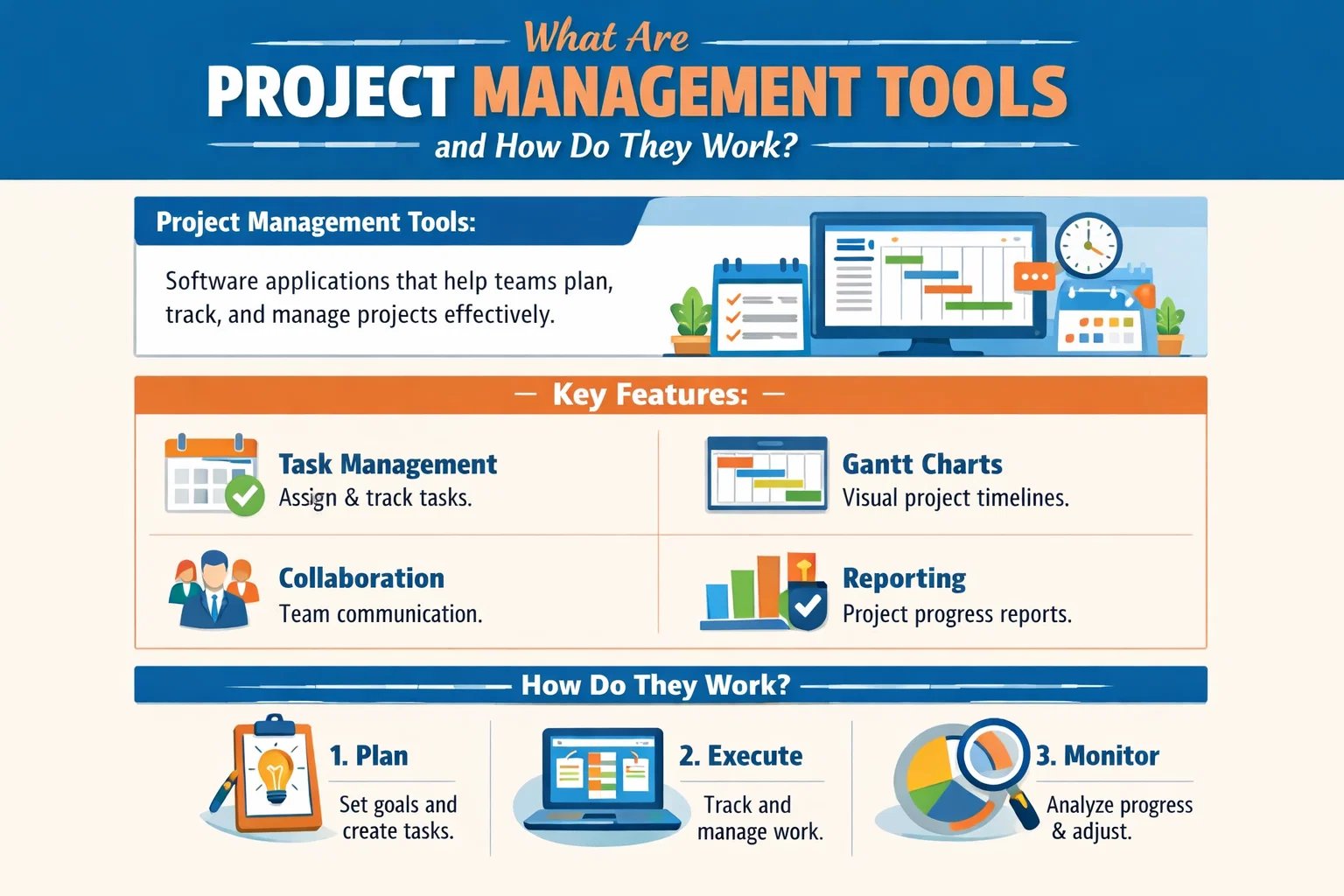
Project management tools are software applications designed to help individuals and teams plan, execute, monitor, and complete projects efficiently. They provide a structured framework for managing tasks, timelines, resources, budgets, and communication in one centralized system.
Instead of relying on emails, spreadsheets, or manual tracking, these tools offer real-time visibility into project progress, responsibilities, and risks.
Why Project Management Tools Are Essential Today
Modern projects are more complex than ever. Teams are often distributed across locations, time zones, and departments. Without proper tools, projects can quickly fall into chaos.
- Improve collaboration and transparency
- Reduce delays and cost overruns
- Track progress in real time
- Align teams with business goals
- Increase accountability
In Tier-1 markets where productivity directly impacts profitability, project management tools are considered mission-critical.
How Do Project Management Tools Work?
At their core, project management tools break large initiatives into manageable components. They provide a digital workspace where teams can plan, assign, track, and collaborate throughout the project lifecycle.
Most tools follow these core stages:
- Project planning and setup
- Task creation and assignment
- Timeline and milestone tracking
- Collaboration and communication
- Monitoring, reporting, and optimization
Key Features of Project Management Tools
1. Task and Workflow Management
Tasks are the foundation of any project. Teams can create tasks, assign owners, define priorities, and set deadlines. Advanced tools support automation, dependencies, and structured workflows to ensure smooth execution.
2. Project Planning and Scheduling
| Planning Feature | Purpose |
|---|---|
| Gantt Charts | Visualize timelines and dependencies |
| Milestones | Track major project phases |
| Calendars | Manage deadlines and schedules |
Visual planning ensures teams clearly understand timelines and deliverables.
3. Collaboration and Communication
Project management tools centralize communication. Teams can comment on tasks, share files, tag colleagues, and maintain full conversation history—reducing email overload and improving clarity.
4. Resource Management
Managers can allocate team members, track workloads, and optimize productivity. This prevents burnout while ensuring efficient use of time and budget.
5. Progress Tracking and Reporting
Real-time dashboards provide visibility into completion rates, bottlenecks, and risks. Leaders can make faster, data-driven decisions—especially valuable in enterprise environments.
Types of Project Management Tools
Traditional Project Management Tools
Designed for structured, linear workflows—commonly used in construction, engineering, and manufacturing.
Agile and Scrum Tools
Support iterative development, sprints, and continuous improvement. Widely used in software and product teams.
Kanban-Based Tools
Visual task boards help teams manage work-in-progress efficiently and maintain workflow balance.
Benefits of Using Project Management Tools
- Higher productivity and efficiency
- Better time and cost control
- Improved accountability
- Enhanced collaboration
- Higher project success rates
These benefits translate directly into stronger ROI, especially in competitive global markets.
Project Management Tools for Remote and Hybrid Teams
With remote work becoming standard, project management tools act as a central hub connecting distributed teams. Cloud access, real-time updates, and integrations with communication platforms make remote execution seamless.
Enterprise Project Management in Tier-1 Countries
Large enterprises rely on advanced tools to manage complex portfolios and regulatory requirements. Enterprise-grade platforms provide:
- Advanced security and compliance
- Custom workflows
- ERP and CRM integrations
- Deep analytics and reporting
How Project Management Tools Improve Business Outcomes
Beyond organizing tasks, these tools align projects with strategic business goals. Leaders gain visibility into risks, performance, and resource utilization—enabling proactive decision-making and faster execution.
Future Trends in Project Management Tools
The next generation of project management software is powered by automation, AI, and predictive analytics. Modern platforms can:
- Predict project risks
- Automate repetitive workflows
- Provide intelligent recommendations
- Enhance strategic planning
These innovations will further transform how teams deliver complex initiatives.
Final Thoughts
Project management tools are no longer optional—they are essential infrastructure for modern organizations. By delivering structure, transparency, and collaboration, these platforms help teams complete projects faster and more consistently.
Whether you are a startup, agency, or global enterprise operating in Tier-1 markets, investing in the right project management tool can significantly improve productivity, profitability, and long-term business success.