
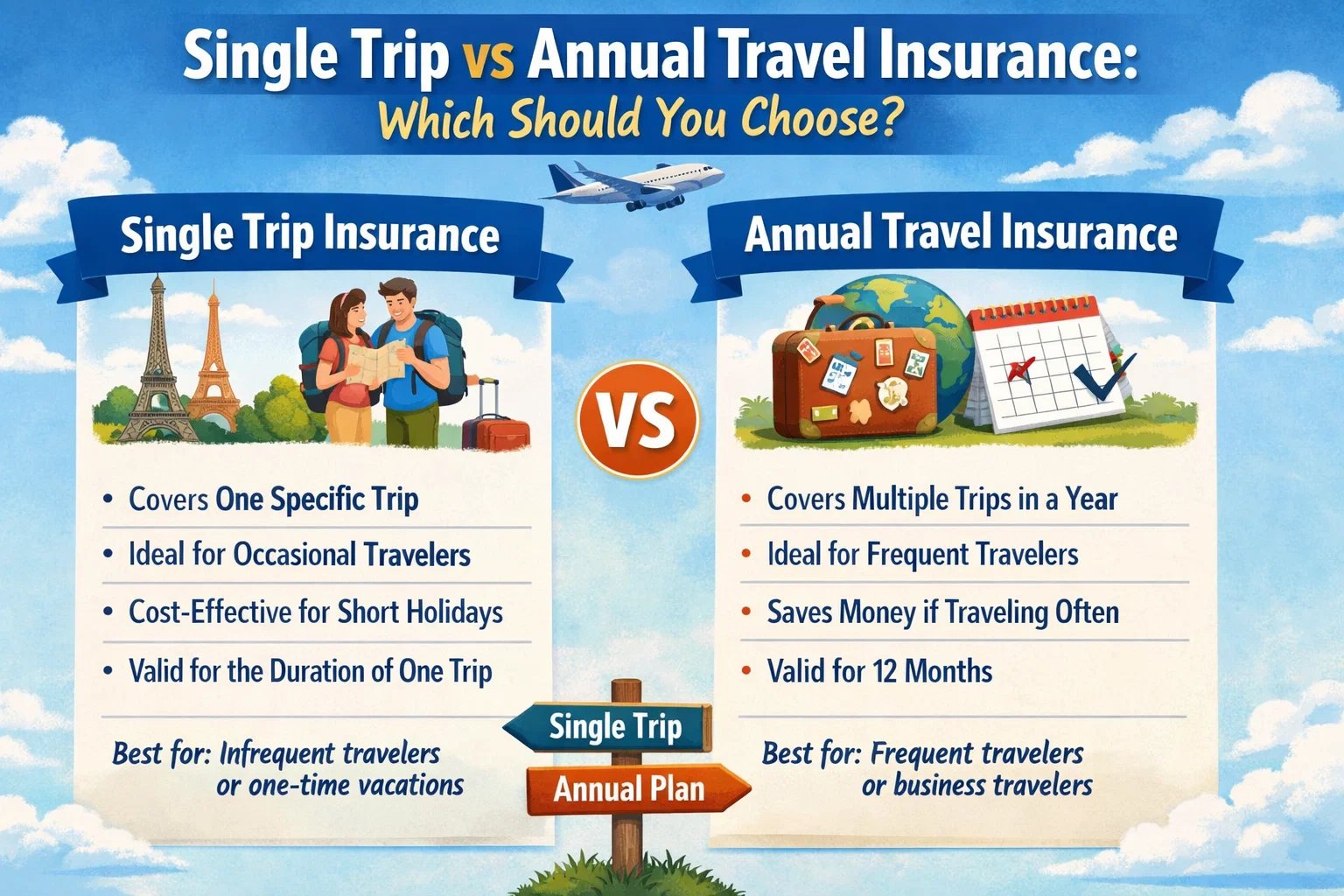
Travel insurance is no longer optional for international travelers, especially when visiting Tier-1 countries like the United States, United Kingdom, Canada, Australia, and European Schengen nations. With rising medical costs, flight disruptions, and travel uncertainties, choosing the right type of travel insurance can significantly impact both financial security and peace of mind.
One of the most common dilemmas travelers face is choosing between single trip travel insurance and annual travel insurance. While both options provide essential coverage, they are designed for different travel patterns and budgets.
What Is Single Trip Travel Insurance?
Single trip travel insurance provides coverage for one specific journey, starting from the day you leave your home country until you return. This policy is ideal for travelers planning an occasional vacation, study trip, or one-time international visit.
Key Features
- Coverage for one specific trip
- Fixed travel dates
- Customizable coverage limits
- Lower upfront premium
- Best for occasional travelers
What Is Annual Travel Insurance?
Annual travel insurance—also called multi-trip insurance—covers unlimited trips within a 12-month period. Instead of buying a new policy each time, travelers remain protected throughout the year.
Key Features
- Unlimited trips during one year
- Maximum duration per trip (usually 30–90 days)
- Cost-effective for frequent travelers
- Continuous protection
- High convenience
Single Trip vs Annual Travel Insurance: Comparison
| Feature | Single Trip | Annual Travel |
|---|---|---|
| Coverage Period | One journey | Multiple trips for 12 months |
| Cost | Lower upfront | Higher upfront but cheaper yearly |
| Flexibility | Fixed dates | Travel anytime |
| Best For | Occasional travelers | Frequent travelers |
| Convenience | Buy each trip | One-time purchase |
Coverage Included in Both Plans
- Emergency medical treatment and hospitalization
- Medical evacuation
- Trip cancellation or interruption
- Flight delay and missed connections
- Baggage loss or delay
- Personal liability and accidental death cover
Cost Comparison
If you travel three or more times per year, annual insurance is usually more affordable than purchasing multiple single-trip policies—especially for Tier-1 destinations where premiums are higher due to medical costs.
Which Option Is Better for Tier-1 Countries?
- Single trip insurance: Ideal for one-time vacations, study visits, or rare travel.
- Annual insurance: Best for business travelers, digital nomads, and frequent international visitors.
Annual plans typically deliver better long-term value for high-cost destinations like the USA and Europe.
Advantages of Single Trip Insurance
- Lower initial premium
- Trip-specific customization
- Good for first-time travelers
- Suitable for long one-time journeys
Advantages of Annual Travel Insurance
- Cost-effective for frequent travel
- No repeated purchases
- Year-round protection
- Ideal for corporate and business travel
Common Mistakes to Avoid
- Ignoring maximum trip duration limits
- Choosing low medical coverage for Tier-1 countries
- Not declaring pre-existing conditions
- Assuming annual plans cover long stays automatically
How to Choose the Right Plan
- Number of trips per year
- Destination countries
- Trip duration
- Budget and premium preference
- Required medical coverage
High-Value Add-Ons to Consider
- Pre-existing disease coverage
- Adventure sports protection
- Cancel-for-any-reason (CFAR)
- Higher medical coverage limits
- Worldwide coverage including USA & Canada
Final Verdict
If you travel once or twice per year, single trip travel insurance is usually sufficient. But if you travel frequently—especially to Tier-1 countries—annual travel insurance offers better value, convenience, and long-term savings.
Choosing the right plan protects not just your trip, but your health, finances, and peace of mind wherever you travel.